
Why Accountants Are Prime Targets for Cybercriminals | Cybersecurity Insights from PPCS
Why Accountants Are Prime Targets for Cybercriminals
⏱️ Reading time: 9 mins
📅 Updated: November 2025
Accountants handle some of the UK’s most sensitive financial data — and that makes them irresistible to cybercriminals. From payroll records and tax returns to client banking details, the information stored in your systems can be far more valuable than cash itself.
The National Cyber Security Centre lists accounting and legal firms among the top three targets for cybercrime in the UK. For attackers, compromising a single practice can expose hundreds of downstream clients.
This article explores why accountants are prime targets for cybercriminals, the main tactics used against firms, and how Cyber Essentials certification helps protect both your business and your clients.
1. High-value financial data

Every client record you hold — from payroll files to VAT returns — represents a valuable target. Hackers know that breaching one firm can yield the financial details of hundreds of businesses and individuals at once.
🛡️ How Cyber Essentials helps:
- Ensures all software and devices are patched and configured securely.
- Limits user access rights to reduce lateral movement.
- Requires secure backups — your best defence against ransomware.
2. Exploiting professional trust
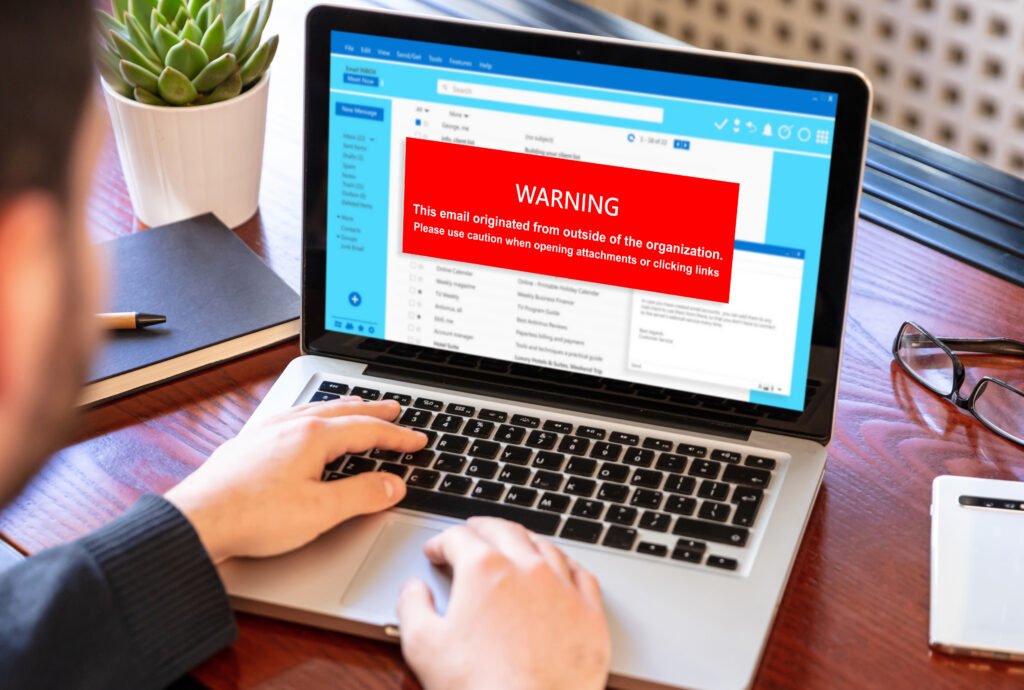
Trust is at the heart of the accountant–client relationship — and cybercriminals know it. Fake emails appearing to be from partners, HMRC, or clients often bypass suspicion, especially when they relate to urgent payments or filings.
⚠️ Common attack types include:
- Business Email Compromise: Criminals spoof a partner’s address to request payments.
- Malicious attachments: “Tax Return 2025.pdf” with hidden malware.
- Domain impersonation: Fake sites (e.g. “ppcs-uk.co”) used to harvest logins.
3. The “busy season” effect

From January to April, deadlines pile up and vigilance drops. Updates get postponed, checks are skipped, and hackers take advantage. PPCS often sees phishing spikes that mirror HMRC submission dates.
- Patch promptly: Cyber Essentials requires applying critical updates within 14 days.
- Backup discipline: Automate daily encrypted backups to cloud or NAS.
- Awareness moments: Run short refresher sessions before tax season.
4. Hybrid working & weak endpoints
Home routers and personal laptops are often less secure than office systems. Attackers exploit unsecured Wi-Fi or outdated antivirus to gain an initial foothold.
🔒 Cyber Essentials controls:
- Enforce firewalls and encryption on all connected devices.
- Use VPNs or HTTPS for remote access — never open RDP ports directly.
- Restrict client data to managed, policy-compliant devices.
5. Regulatory and insurer expectations

When a breach occurs, the ICO asks: “What technical and organisational measures were in place?” Cyber Essentials provides recognised proof that your firm took proactive, government-approved precautions.
Insurers increasingly require certification to qualify for cover or payouts. It demonstrates compliance with baseline controls expected under GDPR Article 32.
6. Supply chain vulnerabilities

Accountants rely on IT providers, cloud platforms, and outsourced services. Attackers now target smaller suppliers first, then pivot into client networks.
🔗 Reduce the risk:
- Choose vendors who hold Cyber Essentials or ISO 27001 certification.
- Segment your network — never allow supplier access to everything.
- Review and document access logs quarterly.
7. The true cost of a data breach
Certification with Cyber Essentials can lower premiums and streamline claims — insurers view it as evidence of good cyber hygiene.
8. Building a culture of cyber awareness

Technology alone isn’t enough. Firms that thrive build cyber awareness into their everyday workflow. Cyber Essentials acts as the framework for that mindset shift.
- Monthly “Cyber Minute”: One-minute security highlight during team meetings.
- Positive reporting: Reward staff for flagging suspicious activity.
- Simple KPIs: MFA enabled? Backups verified? Updates on time?
Conclusion: Turn a top target into a tough target
Cybercriminals go after accountants because they control valuable data and trusted access. With Cyber Essentials certification, your firm demonstrates measurable, verified protection — giving clients, regulators, and insurers confidence that you take data security seriously.
Ready to protect your accounting practice?