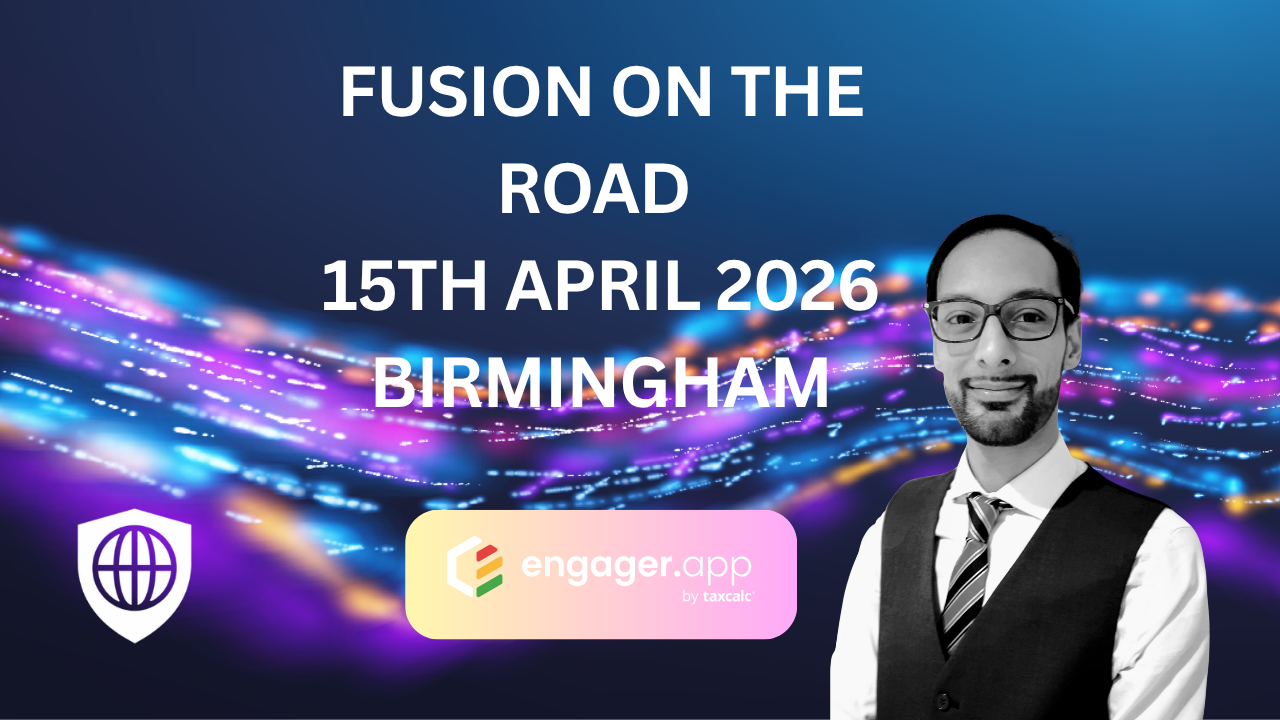
PPCS at Fusion on the Road Birmingham | AI Governance for Accountants

For me, this is what makes Fusion genuinely interesting.
It is not just about software demos. It is about where the profession is going next – and whether firms are building enough control around the technology they are adopting.
On this page
Event details
Fusion on the Road is designed for progressive accountancy firms that want to modernise how they work. With workflow, compliance, software integration and firm efficiency all on the agenda, it is exactly the kind of room where the profession’s next challenges should be discussed openly.
Why I’m attending
PPCS works closely with UK accountants on cyber security, governance, compliance and practical technology assurance. That means we see both sides of the current shift: the excitement around AI-enabled software and the growing uncertainty around how firms are meant to control it.
Events like this matter because they bring together firms that are already adopting smarter tools – but many of those same firms are still missing the policies, registers, oversight and accountability needed to use AI properly.
That is why I’m pleased to be part of the Birmingham event and why the conversation matters beyond software alone. It connects directly to the wider work we do at
PPCS
and through our specialist work on
AI governance for accountants.
The missing conversation: AI governance for accounting firms
A huge amount of innovation in accountancy now sits somewhere on the spectrum of automation, machine learning, prediction, assistant-led workflows or embedded AI. Firms are already seeing it inside bookkeeping tools, client communication, document handling, workflow prompts and operational decision support.
But one question still gets overlooked: who is governing all of this?
What firms are doing
- Trying new AI-enabled features as they appear in existing software
- Using AI tools to improve speed, capacity and internal efficiency
- Exploring new ways to reduce admin and support teams
What often gets missed
- No formal AI register
- No risk classification or ownership
- No clear policy for approved use
- No human review points or assurance trail
That gap is exactly where governance becomes commercially important. It affects trust, professional responsibility, insurance conversations, internal consistency and how confidently a firm can scale its use of AI.
Introducing AIGAS
AIGAS: built specifically for accounting firms
The AI Governance Assurance Standard (AIGAS) was created to give UK accounting firms a practical, structured route into AI governance. It is not vague theory and it is not written for big-tech vendors. It is designed for firms that use AI and need proportionate control around that use.
AIGAS includes three governance levels – Bronze, Silver and Gold – with Gold aligned to ISO/IEC 42001 principles for stronger AI management system maturity.
6 core governance pillars
12-month assurance cycle
Built for UK accountants
In practical terms, the framework helps firms think about the essentials: approved use, AI tool records, risk ownership, policy, human review, incidents, accountability and evidence. It is a governance model that fits the profession rather than forcing the profession to adapt to generic AI guidance.
For firms that want a more formal route, PPCS also provides
support with ISO 42001 for accountants,
helping practices move from baseline control to a more mature AI management approach.
The free AI Register is a smart starting point
One of the easiest ways for a firm to begin is to document what it is already using. That is why we created
the free AI Register
– a simple, practical way for accounting firms to inventory AI tools, capture usage and begin putting governance around them.
Why it helps
- Creates visibility over AI usage across the firm
- Supports better decision-making and risk awareness
- Helps identify where controls may be missing
What to do next
- Start your register
- Review who owns each tool or workflow
- Use that baseline to build stronger governance
If you want an even quicker diagnostic first, you can also use our
free AI governance check
to get a fast snapshot of how your current approach stacks up.
Why this event matters now
The accountancy profession is moving fast. Software is becoming more connected, more automated and more intelligent. That creates opportunities – but it also increases the need for disciplined adoption.
Fusion on the Road is exactly the kind of place where that conversation should happen. The technology story is already well underway. The governance story needs to catch up.
If your firm is already adopting AI features, experimenting with assistants, or relying on software that now includes predictive or automated intelligence, then this is no longer a future issue. It is operational. It is current. And it deserves the same seriousness firms already give to cyber security, compliance and risk.
Let’s talk in Birmingham
If you’re attending Fusion on the Road, come and say hello. If AI is already creeping into your workflows – or if you want to make sure your firm is adopting it responsibly – I’d be glad to speak with you.
Practical governance for accounting firms. Clearer control. Better confidence. Stronger AI adoption.
Final thought
I’m looking forward to Birmingham because the profession needs more conversations that bridge innovation with responsibility. That is where real progress happens – not just by adopting new tools, but by understanding how to use them well.
If you are attending Fusion on the Road on 15th April 2026, I hope to see you there.