Xero + AI: Why Accounting Firms Need ISO 42001 Governance
Xero + AI: Why Accounting Firms Need ISO 42001 Governance
Artificial intelligence has quietly moved from buzzword to back-office workhorse in accounting. If your firm uses Xero, you are already sitting on a powerful set of AI features whether you have switched them on or not. The opportunity is huge, but so is the governance challenge, especially as new standards like ISO 42001 arrive to regulate how organisations use AI.
This article explains what Xero is actually doing with AI today, how the wider accounting software market is changing, and why partners in UK accounting firms should now be thinking seriously about AI governance and ISO 42001 not just the tech itself.
Xero’s New AI Capabilities: What Is Real Today
Just Ask Xero (JAX): conversational automation
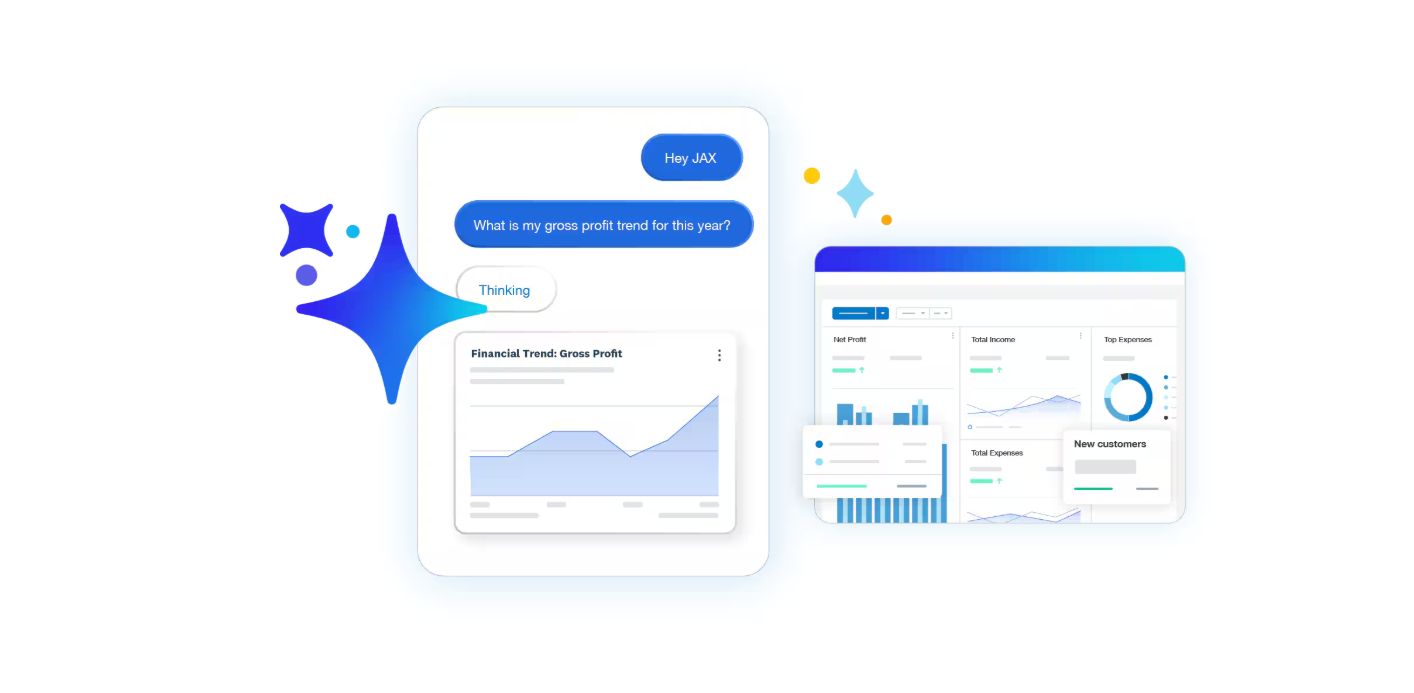
Xero has been investing in AI and machine learning for several years. One of its most visible moves is Just Ask Xero (JAX), a generative-AI powered smart companion that lets users talk to their accounts. JAX is being rolled out as a conversational interface across Xero and common channels such as mobile apps, email and messaging.
Instead of clicking through menus, users can say things like:
- “Create an invoice for Smith & Co for last month’s services”
- “What bills are due this week?”
- “Show me who still owes us money”
JAX then prepares the relevant transactions or pulls together the right information for review. Xero’s own positioning is clear: this is about saving time on repetitive tasks and surfacing insights from the data already in the ledger, not about replacing accountants.
You can read more about Xero’s AI vision here: Xero’s AI Vision Announcement
AI-powered bank reconciliation and auto-rec
Bank reconciliation has long been one of Xero’s flagship features, and it is an area where AI is now deeply embedded. Xero uses machine-learning models trained on millions of historical reconciliations to suggest the most likely matches between bank statement lines and invoices, bills or account codes.
Building on that, Xero has introduced automatic bank reconciliation powered by JAX (beta). Instead of simply suggesting matches, this feature can:
- Automatically categorise and reconcile bank lines where the AI has high confidence
- Learn from the firm’s own reconciliation history over time
- Reduce manual data entry and errors in low-risk, repeatable transactions
Importantly, users can still review what has been auto-reconciled and override it where needed. Xero describes this as “smart automation you can trust” rather than a black box.
More information on Xero and AI in accounting: Xero AI Guide for Accountants
In practical terms, this means:
- The AI is already touching your clients’ financial records
- It is learning from a mix of your data and patterns across the Xero ecosystem
- Its decisions directly affect ledgers, cash-flow views and downstream reports
For a practice partner or Responsible Individual, that is no longer “just a feature” it is a governance issue.
AI Is Becoming the Norm in Accounting Platforms
Xero is part of a much wider shift towards AI-enabled accounting software. Across the market, AI is now used for:
- Bookkeeping and automated transaction coding
- Invoice data capture and OCR
- Cash-flow forecasting and scenario modelling
- Client analytics and performance dashboards
Many cloud accounting suites now embed AI directly into the core platform. On top of that, specialist add-ons integrate with Xero to handle transaction entry, anomaly detection and data-accuracy checks, often claiming time savings of 20–40 percent on certain workflows.
From an accounting firm’s perspective, this means:
- AI is now built into the core tools your team and clients already use
- You may be using several different AI engines across your tech stack
- Each engine has its own data flows, underlying models and risk profile
That mix is exactly what new governance standards like ISO/IEC 42001:2023 (ISO 42001) are designed to bring under better control.
ISO 42001: The AI Governance Standard Behind Responsible Xero Use
ISO/IEC 42001:2023 is the first international AI management system standard. It sets out requirements for establishing, implementing, maintaining and continually improving an AI Management System (AIMS) within an organisation.
Official overview: ISO 42001 Standard
Where ISO 27001 focuses on information security, ISO 42001 focuses on the responsible use of AI. It emphasises:
- AI risk management and impact assessment
- Transparency and accountability for AI-driven decisions
- Fairness, bias and explainability
- Security and data protection in AI systems
- Oversight of third-party AI suppliers and tools
Crucially, ISO 42001 is not just for big technology vendors building AI models. It is intended for any organisation that develops, deploys or uses AI systems. That includes accounting firms using Xero AI, auto-reconciliation and other AI-enabled tools in day-to-day work.
A helpful plain-English explanation: ISO 42001 Guide
For an accounting firm, this means:
- If you use Xero AI features like JAX or auto-reconciliation, you are part of the AI supply chain
- You remain accountable to clients, regulators and professional bodies for AI-influenced outputs
- You need a structured way to identify, assess and control AI-related risks
Why Xero’s AI Is Now a Governance Conversation
Once AI can generate invoices, reconcile bank lines and surface insights, it stops being a “nice-to-have” feature. It becomes a source of operational and compliance risk if it is not properly governed.
Key risk areas include:
- Data protection risk – AI features may process personal data and sensitive financial information
- Integrity risk – auto-reconciled or AI-suggested entries might be wrong and remain undetected
- Explainability risk – it can be harder to explain why a transaction was coded a certain way
- Vendor risk – you rely on Xero and other providers to operate AI responsibly and securely
ISO 42001 gives firms a framework to treat Xero AI not as “magic” but as another system inside the firm’s control environment – one that must be documented, risk-assessed, monitored and improved over time.
A Practical, 42001-Aligned Approach to Xero AI in Your Firm
You do not need to become ISO 42001 certified overnight. But you do need to start governing Xero AI in a way that looks increasingly like ISO 42001 and that fits alongside Cyber Essentials and ISO 27001.
1. Create an AI asset register
- List all AI-enabled tools in use: Xero JAX, auto-reconciliation, add-ons, external AI assistants and so on
- Record what data each tool processes: client names, bank details, invoices, payroll, working papers
2. Run AI risk assessments on Xero use cases
- Treat each use case separately: bank rec, invoice creation, cash-flow forecasting, analytics
- Assess impacts if the AI is wrong, biased, unavailable or compromised
3. Tighten vendor due diligence around Xero AI
- Review Xero’s AI documentation, privacy notices and security statements and keep them on file
- Ensure contracts and data-processing agreements reflect how AI features process and store client data
4. Define clear “human in the loop” controls
- Decide which AI-generated or AI-reconciled items must be reviewed by a qualified human
- Build these checks into documented workflows, not just informal habits
5. Update policies, procedures and training
- Explicitly include AI in information security and data-protection policies
- Train staff on where Xero AI is used, what it can and cannot do, and how to challenge AI suggestions
6. Plan a roadmap towards ISO 42001 alignment
- Map where your existing ISO 27001 or Cyber Essentials controls already support AI governance
- Identify gaps specific to AI risk management, impact assessment and supplier oversight
How PPCS Helps Accounting Firms Govern Xero AI
At PPCS, we specialise in helping accounting practices combine cyber security, information security and AI governance. We work with firms that use Xero and other cloud platforms to:
- Map out where AI appears in their existing software stack, including Xero AI features
- Design pragmatic policies and controls that match real-world practice workflows
- Align Cyber Essentials, ISO 27001 and ISO 42001-style governance into one coherent framework
AI in tools like Xero is an opportunity – but only if you can prove it is governed.
Firms that embrace Xero AI and other accounting automations, while also putting strong AI governance in place, will be the ones clients trust with their data, their decisions and their future.
Ready to Govern AI in Your Accounting Practice?
Talk to PPCS about Cyber Essentials, ISO 27001 and ISO 42001 governance for firms using Xero and cloud accounting platforms.